
Instrumentalism vs Empowerment; or how to think like an artist
Posted: December 16th, 2011 | Author: Erica Hagen | Filed under: Uncategorized | Leave a comment »JR, the now-famous artist recently recognized with the 2011 TED prize, once plastered the rooftops of Kibera with close-up images of womens’ faces. The striking images often featured in our presentations about Map Kibera, because without knowing anything about the artist or the intent, shack rooftops covered in human visages resonated with what we hoped to do with our work: make the “invisible†visible, and humanize the apparently inhuman slum. A recent New Yorker article provides interesting insight into JR’s work.

JR is now undertaking a massive project of printing out other people’s self-portraits on jumbo poster paper so that their own images can be plastered like graffiti around their communities, or elsewhere.
He is, in a sense, taking the concept he started out with in Kibera and other marginalized neighborhoods and taking it to its logical conclusion: creating an army of graffiti-artist self-portraitists. Though he tried to practice his art in secret by hiding his identity and using renegade graffiti methods, it still earned him personal fame and fortune – turning the world’s attention back on him. It seems he’s again tried to push the lens back to the people he photographs, by serving as their printer. Whether it will succeed is not yet clear; to me the images start to look like a giant paper Facebook. But the example led me to consider further the meaning behind self-representation in a slum.
While building the various tools of representation in Map Kibera – creating a map, video, or blog post about oneself – the main thing everyone wanted to know was, but what changed in Kibera because of it? Even just a few months – or weeks – into the project. Representing oneself visually, online, on video, or on a map was considered a means to a specific end. Rightly so, I thought.
But, in fact, might it be considered disempowering to require that because self-representation is happening in a setting like an African slum, it must achieve measurable development “outcomes� Is pushing the development agenda along standard pathways minimizing other reasons for expression, ignoring the need for local ownership of information and news, or forcing a process of open-ended exploration by participants of what they hope to achieve to end too soon? There is a subtle difference between standard urban development or activism and the way that new media allows for what’s been called networked organizing. I’ve thought about these questions a lot while going between the world of development and the world of art, a rare border-crossing I’ve made at venues like Ars Electronica and Picnic.
Did people challenge JR the same way? It’s possible that they did, but because he’s positioned as an “artist†rather than a technologist or a development worker, the expectation isn’t there. The impact is in the change of perception, in the laying of claim to ones environment, in the increasingly common ability to declare, this place is “me”, or “us.” It’s not the same as ownership, but a form of it nonetheless. Again, it’s a way of asking, whose reality counts? Who does this place belong to? Perhaps along the lines of Occupy Wall Street, there’s a calling to witness, a reckoning, a question long before the hard work of hammering out answers can occur. The mental shift before the physical.
Maybe coming from the development paradigm, we didn’t consider this a viable option.
The core business of development has generally been to either impose, inspire, or create change (depending on your point of view) in circumstances, structures, and environments where conditions are intolerable on one level or another (that is, most of the planet).
The core business of art, well, that’s up for debate but its often seen as an end in itself- the change effected by art is subtle in the mind of the observer and artist, even when the art itself is strongly polemic. It’s not supposed that direct action need be taken but that a collective mental shift occurs.
In the article, JR mentions that people in places like urban slums are more and more sensitive to the way they are portrayed in the media. They are increasingly aware – and angry – about misperceptions. We have found that everywhere we’ve gone people are extremely motivated to control that image – and in so doing, control their environment. Once they’ve begun to take charge of their image, and become engaged citizens – yes, there’s a call for change, a call for results. And I still believe it’s useful to create information with a purpose – to map and write about specific topics while linked up with community groups that are active, in order to call for certain changes and guide planning. But I’ve also seen that there is a thrill of discovery – of engagement – that naturally comes with turning a camera or GPS on your own backyard, which needs to be valued. It’s a matter of saying, as with JR’s work: Here We Are. Repeatedly. And only once heard, to ask Now What?
Now, if you dig a bit deeper, you do find that even JR seems to have gotten caught up in this murky area. He’s started a foundation of some kind (the New Yorker doesn’t bother to explain, as though this is the simplest of things – to give some money to a slum) to help the places that he’s photographed in some way other than through his art. I can only imagine what happened in Kibera – where people are hyper-aware of the money to be made off their images, and those of their children. Any foreign photographer is not accused of getting rich off “art†(the concept being blatantly inconceivable there) but getting rich off selling someone’s image – possibly caught in a less than proud moment – to NGOs who then are seen to profit.
Nothing done in such a setting comes without moral strings attached, often pulling in different directions. This is the heart of the matter.
I’d like to suggest that we outsiders working in development (especially in new media) think a bit more like artists, giving those who make representations of themselves the freedom to decide what their stories “mean†– even more so when new open tools are being employed and certainly the world at large has not figured out everything they are capable of. Our job, perhaps, is to protect the internet from control and censorship, and promote access, continue to work to open and flatten this arena.
That’s not to let the artist off the hook. I wondered what was the real story behind JR’s posters. Did people balk at his camera? Did he have to explain, pay, or at least befriend them first? What’s the story of that encounter? And what do they think of him now? In Kibera, we found that he had to buy – and may continue to buy – his roof space from the residents who live beneath it. Art, like journalism, about a place that is not one’s home is always a matter of negotiation and examination of audience and purpose.
There is not one interaction in image-making – perhaps, in all of development – that isn’t morally fraught. But isn’t it more interesting to let that be the starting point for real discussion of the meaning and goal of self-representation?
Tanzania: Involving Community Organizations
Posted: August 30th, 2011 | Author: Erica Hagen | Filed under: Uncategorized | Leave a comment »
The first community forum went well. It was deal breaker for the project in the sense that if we didn’t get the community to share our ideals and objectives, making them their own, then the project would fail. Now the map is basically complete for first draft. We have enough of a basemap so we can now support platforms like Ushahidi and enable blogs to be geolocated.
Collecting the data and producing the map, as I’ve previously mentioned is only a first step. The same can be said for involving the students and community members. By creating a small nucleus of highly engaged people, proficient in mapping and storytelling techniques understand the project, they can evangelise the project to others in their community. This ‘infects’ the community from the inside allowing for more people to interact and share the project without ‘outside’ involvement. This will in time hopefully reach a plateau where the entire process of updating the map, reporting and blogging becomes self-sustaining using only the initial equipment and investment.
With this in mind, in the build up to the final community forum of the project (where presentations will be made to the community as a whole ie. interested citizens, civil servants and politicians) we gave a ‘pre-release’ talk to ten community based organisations. The format for this was quite simple, the students introduced the map with it’s features and intended functionality and the community members introduced the storytelling elements.
Within this process I spent most of it being a photographer and an observer. It wasn’t quite seeing the monster you created evolve but when presenting both students and the community are owning the process. The community organisations engaged in a Q&A session then participated in reporting using Ushahidi.
During the Q&A many questions dropped out regarding the future of the project and how the map can be used further. Because we are still formulating the future strategy it is difficult to say what the next step will be, but it will be along the lines of franchising to other areas overseen by community, NGO/CBO and Ground Truth, constructing this framework will be taking place for much of the coming week.
We are also printing the map and distributing it. This is key; in using Open Street Map, the collected data is freely available for viewing and data analysis without restrictions like a prohibitive licence. However accessibility to computers and internet understandably is a problem in communities like Tandale. To enable the community to view their map we will be printing A2 maps for placement in the sub-ward offices and printing A4 sub-ward handouts.
By placing it in a communal areas for each of the communities, we aim to reduce the barrier of people using the map by making it accessible. This process has started with our small nucleus of students and community, expanded by involving community based organisations and will be expanded further by integrating the map into governmental offices at the sub-ward level. Having the map built into the fabric of the community from the beginning of the project should make further incremental additions easier.
Community organisations being fully involved in the project is the next step, the process has been started and the ball is rolling. However Eid is coming in the next week, so everything is going pole pole, Swahili for slowly slowly. However tangible results are starting to become very clear, on all levels with all stakeholders.
Originally posted by Mark Illiffe on his blog on August 29, 2011. Mark is working with GroundTruth in Tandale, Dar es Salaam this month introducing community mapping and reporting to Dar es Salaam residents, in a project supported by the World Bank and Twaweza.
Dar es Salaam – Introduction to Informal Tanzania
Posted: August 15th, 2011 | Author: Erica Hagen | Filed under: tandale, Tanzania, Uncategorized | 1 Comment »In June, GroundTruth began planning a project in Dar es Salaam, supported by the World Bank and Twaweza. We’re training in both mapping and citizen reporting in Tandale, an informal settlement of Dar. During August, we’ll be working with both community members and urban planning students at Ardhi University to create maps and build reporting resources for this community.
Since Tanzania is so close to Kenya, we wanted to involve Map Kibera Trust members as much as possible in training their neighbors. Though they share a language, socially and politically Tanzania is about as far from Kenya as you can imagine for a country whose border with its neighbor was only drawn during the last century. The socialist roots in the country, as well as the nation-building efforts of Julius Nyerere have left their mark. Kibera is also a far cry from Tandale, as we found out in June – with a much lower population density, it suffers from problems of rapid urban growth and lack of planning, but appears much more like a rural village, with space at less of a premium and social problems that appeared to us to be much less acute. Computer and internet usage also aren’t nearly at the level they are in Nairobi. It will be interesting to see how the techniques we’ve used in Map Kibera translate here.
Map Kibera Trust members Simon Kokoyo, Lucy Fondo and Hassan Abdalla, along with project leader Mark Iliffe, have been launching the activities this past week. We’ll repost some of their blogging to paint a picture of the activities.

Simon posted on Mathare Valley Blog about the first day’s forum in Tandale:
“The forum was started off by a speech by Tandale Word Executive Manager. More than 37 people including community members. Participants were happy to learn that they can be able to produce a map about their community and use to engage with the government and NGOs in the development and improvement of infrastructure. Currently Tandale and most of Dar es Salaam appears as blank spot on the Open Street Map platform.
Some of the suggestion participants shared on how maps and the use of citizen reporting can be used for development included;
- The map produced will help improve dialogue between community and development partners for infrastructure improvements
- Through citizen mapping, the community will highlight its own issues as opposed to mainstream media which focuses on mostly the negatives
- The use of map and community reporting will help stimulate adoption of local solution to problems faced by the communities
- The community will acquire new skills in ICT helpful in mass circulation / distribution of information
For the next four weeks, Map Kibera Trust will be in Dar es Salaam training community members and students on community participatory mapping skills, use of simple technologies and citizen reporting.
LESSON LEARNT: Communities are capable of interpreting maps they have participated in developing and using it to initiate dialogue with development partners and government agencies. What communities needs is ‘method’ of presenting the data collected.”
Lucy and Hassan will be writing updates on most days about their experience. Their posts are on Map Kibera’s blog.
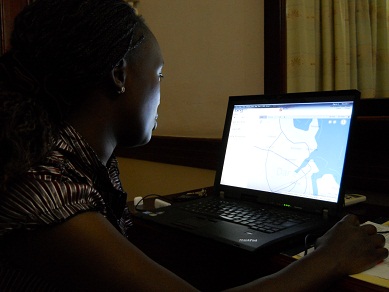
Here is Lucy’s take on working with women in Tandale: “Today (9/8/2011) I was in the company of community members from Tandale, Dar es Salaam to help them undertake mapping of their own community and also talk about community media. To be in Tandale, Tanzania was exciting but being with follow women was even more exciting. When starting the discussion about the importance of mapping, it occurred to me the issues which women were relating directly consumed a lot of time.
When I asked one of the women what she would liked to be mapped in her area, she said, toilets and water points. Reasons, she said in Swahili “wakati wa mvua, jamii yangu (Mukunduge,one of the 6 sub-wards) ni kawaida mafuriko na maji machafu kuwa kila mahali†(when it rains, my community (Mukunduge) is usually flooded with dirty water everywhere).  She believes by having a map, she can be able to talk confidently and convincingly with the municipal council about flooding problem in her community.
I have been in Dar es Salaam in Tandale and Sinza areas. One can witness the dominance of men in many cyber cafes. There is higher usage or percent in these cyber cafés.
Also some women were happy to learn that they will be trained on how to use video cameras  to tell their own community stories which will be put in the internet and read worldwide . I am happy that we have been able to identify both women and men who will be trained on the use of global positioning system (GPS) and how to download data into the computer.”
And, Lucy comparing Tandale’s waste collection with Kibera’s:
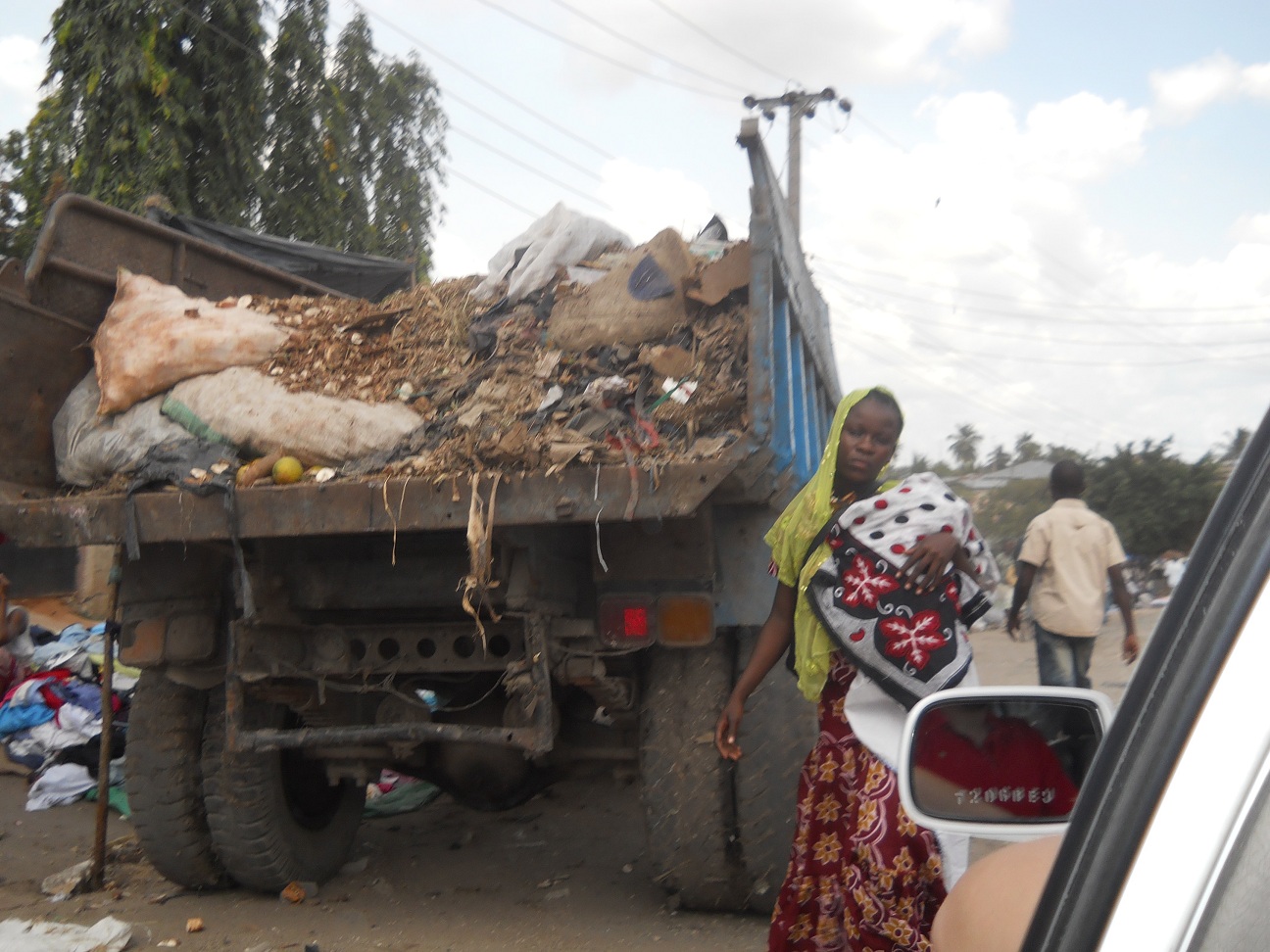
“Most of the farmers around  Dar-salaam take their agricultural produce to Sokoni market(Tandaleward).The most amazing thing about this market is that you will always see a municipal council’s lorry packed somewhere around ready to collect garbage from the market.For me, this is welfare because when I compare Sokoni market with Toi market i.e. in Kibera, I see I a big contrast. In Toi market you will never see a lorry coming to collect gabbage.The burden of garbage collection is usually left to the business owners….
My opinion is for the City Council of Nairobi to atleast deploy two lorries on weekly basis for garbage collection. I believe with this done, it will help in maintaining a clean and safe environment free from pests and diseases.”
Intensity Casino Review: Comprehensive Guide #197
Posted: January 1st, 1970 | Author: root | Filed under: Uncategorized | Leave a comment »
Introduction to Intensity Casino
intensity online casino emerges as a game-changer in the Australian online casino landscape, offering features that truly resonate with local players.
The casino’s commitment to responsible gaming and player protection sets new standards in the Australian online gambling industry.
Since its launch, Intensity has focused on delivering high-quality gaming experiences tailored specifically for the Australian market.
The casino’s infrastructure utilizes state-of-the-art technology including 256-bit SSL encryption, secure payment gateways, and certified random number generators. All games undergo regular testing by independent auditing firms like eCOGRA and iTech Labs.
Player feedback drives continuous improvement, with the casino actively soliciting and implementing suggestions from its Australian member base.
Australian players benefit from localized features including AUD currency support, local payment methods like POLi and bank transfers, and customer service teams familiar with Australian gambling regulations and player preferences.
About Intensity Casino
Intensity Casino launched with a clear mission: to provide Australian players with a world-class online gaming platform that combines entertainment, security, and value. The platform partners with over 50 leading software providers to deliver a game library exceeding 3,000 titles.
Intensity’s commitment to innovation means regular updates with new games, features, and promotional offers designed specifically for the Australian market.
Licensing and Regulatory Compliance
All games featured on the platform carry certification from independent testing laboratories, confirming that outcomes are genuinely random and payout percentages match published figures.
The licensing authority conducts regular compliance audits, examining everything from random number generator certification to anti-money laundering procedures and responsible gaming implementations.
Australian players can verify the casino’s licensing credentials through publicly available registries, ensuring complete transparency and accountability.
Dispute resolution mechanisms provide fair processes for handling any player complaints, with the licensing authority serving as an impartial mediator when necessary.
Comprehensive Game Collection
Slot Machines
The slot library features over 2,000 titles ranging from classic three-reel games to elaborate video slots with multiple bonus features. Popular categories include progressive jackpots, megaways mechanics, and branded titles based on movies, TV shows, and music icons.
Leading providers like NetEnt, Microgaming, Pragmatic Play, Play’n GO, Yggdrasil, and Evolution Gaming ensure every slot delivers premium graphics, smooth animations, and engaging soundtracks.
Bonus buy features allow players to purchase direct access to bonus rounds, appealing to those who prefer immediate access to the most exciting game features.
Megaways slots utilize dynamic reel systems providing up to 117,649 ways to win per spin. Cascading reels, unlimited multipliers, and free spin features create intense excitement and substantial winning potential.
Progressive jackpot slots offer life-changing prize pools, with major networks like Mega Moolah regularly creating millionaires. These games link players worldwide, with each bet contributing to ever-growing jackpots.
Free spin features activate through scatter symbols, offering rounds where multipliers, expanding wilds, or additional bonuses can significantly boost payouts beyond regular gameplay.
Grid slots replace traditional paylines with cluster pays or match-three mechanics, creating fresh gameplay dynamics and unique winning patterns.
Table Games
Classic table game enthusiasts find comprehensive selections of blackjack, roulette, baccarat, and poker variants. Each game offers multiple versions with different rules, betting limits, and side bet options.
Blackjack variants include Classic, Atlantic City, European, Spanish 21, and Pontoon, each with unique rule sets affecting house edge and optimal strategy.
Roulette options span European, American, French, and innovative variants like Lightning Roulette and Immersive Roulette, catering to all player preferences.
Baccarat games range from classic Punto Banco to speed versions and variants with side bets on pairs, ties, or specific card combinations.
Video poker combines slots and poker strategy, with games like Jacks or Better, Deuces Wild, and Joker Poker offering some of the best odds in the casino when played optimally.
Live Casino Experience
The live casino brings authentic gaming atmosphere directly to Australian players’ screens with professional dealers conducting games in real-time via HD streaming technology.
Evolution Gaming powers the live casino, delivering industry-leading presentation quality, multiple camera angles, and interactive features that enhance the social gaming experience.
Live blackjack tables accommodate various betting ranges from low-stakes recreational play to high-roller VIP tables with exclusive features and dedicated dealers.
Live roulette includes standard tables plus innovative game show hybrids like Lightning Roulette, where random multipliers up to 500x can electrify any round.
Live baccarat offers classic gameplay plus speed versions for those preferring faster-paced action without sacrificing the authentic casino atmosphere.
Game shows like Crazy Time, Monopoly Live, and Deal or No Deal bring TV-style entertainment with enormous winning potential and engaging bonus rounds.
VIP tables provide personalized service for high rollers, with higher betting limits, exclusive dealers, and priority seating at premium tables.
No deposit bonuses allow new members to test games and features without financial commitment, though wagering requirements and withdrawal limits apply to bonus winnings.
Tournament competitions let players compete for prize pools by accumulating points through qualifying game play, adding competitive excitement to regular sessions.
Cashback offers return a percentage of losses over specific periods, providing a safety net that helps extend playing sessions and reduce risk.
Bonuses and Promotional Offers
VIP tiers bring escalating benefits including higher withdrawal limits, faster processing times, dedicated account managers, birthday bonuses, and invitations to exclusive events.
Loyalty programs accumulate points for real-money wagers, with points exchangeable for bonus credits, free spins, or exclusive prizes and experiences.
Reload bonuses reward existing players with percentage matches on subsequent deposits, often tied to specific days or promotional events throughout the month.
New players receive generous welcome packages typically including match bonuses on initial deposits plus complimentary spins on featured slot titles. These offers provide substantial extra value for exploring the casino’s extensive game library.
All bonuses carry terms and conditions including wagering requirements, maximum bet limits, game restrictions, and time limitations. Players should review these terms before accepting any offer.
Wagering requirements specify how many times bonus funds must be wagered before becoming withdrawable, typically ranging from 30x to 50x the bonus amount.
Game contributions toward wagering vary, with slots usually contributing 100% while table games may contribute less or be excluded entirely.
Maximum bet restrictions prevent large bets while clearing bonuses, protecting both players and casino from bonus abuse.
Time limits require wagering completion within specified periods, typically 7-30 days, after which unused bonuses and associated winnings expire.
Banking Options and Transactions
Security measures include SSL encryption for all transactions, fraud detection systems, and strict adherence to anti-money laundering regulations.
Intensity Casino supports diverse payment methods popular among Australian players including credit cards (Visa, Mastercard), e-wallets (Skrill, Neteller, PayPal), bank transfers, prepaid vouchers (paysafecard), and cryptocurrency options (Bitcoin, Ethereum).
Deposits process instantly for most methods, allowing immediate access to funds for gameplay. The casino doesn’t charge processing fees, though payment providers may apply their own charges.
Withdrawal limits depend on account status and VIP tier, with higher-tier members enjoying elevated limits and priority processing.
Withdrawals require initial account verification through KYC (Know Your Customer) procedures involving identity document submission. Once verified, subsequent withdrawals process more quickly.
Withdrawal processing times vary by method: e-wallets typically process within 24-48 hours, credit cards within 3-5 business days, and bank transfers within 5-7 business days.
Video tutorials demonstrate key processes like account setup, making deposits, claiming bonuses, and navigating the game library.
Email support suits less urgent matters or situations requiring detailed explanations, with responses typically arriving within 12-24 hours.
The support team operates 24/7 via multiple channels including live chat, email, and phone support, ensuring Australian players can get assistance whenever needed.
Comprehensive FAQ sections cover common topics like registration, verification, deposits, withdrawals, bonuses, and technical issues, often providing immediate answers without contacting support.
Live chat provides immediate responses to most queries, with knowledgeable agents trained to handle technical issues, account questions, payment concerns, and bonus inquiries.
Phone support offers direct voice communication for players preferring personal interaction, with Australian-friendly hours ensuring convenient access.
Touch-optimized controls make navigation intuitive, with swipe gestures, tap interactions, and mobile-friendly menus designed specifically for smaller screens.
The mobile site requires no download, accessible directly through web browsers on iOS and Android devices while maintaining all features available on desktop.
All games undergo mobile optimization, though some older titles may offer better experiences on desktop due to screen size and complexity considerations.
Mobile Gaming Platform
Mobile apps for iOS and Android offer additional convenience with one-tap access, push notifications for promotions, and sometimes exclusive mobile bonuses.
Intensity Casino’s mobile platform delivers full functionality across smartphones and tablets, with responsive design ensuring optimal display regardless of device or screen size.
Links to professional support organizations like Gambling Therapy, Gamblers Anonymous, and Gambling Help Online provide confidential assistance for anyone struggling with gambling-related issues.
Age verification systems strictly prevent underage access, with document checks and database verification ensuring only adults can register and play.
Self-exclusion options allow temporary or permanent account closure for players needing breaks, with cooling-off periods ranging from 24 hours to six months or more.
Intensity Casino prioritizes responsible gaming with comprehensive tools helping players maintain control including deposit limits, loss limits, session time limits, and reality check reminders.
Staff training ensures support teams can recognize problematic behavior and provide appropriate assistance or referrals to specialized services.
Responsible Gaming Commitment
Final Verdict
Intensity Casino successfully combines extensive game variety, generous promotions, robust security, and player-focused features into a comprehensive online gaming destination for Australian players.
The platform’s commitment to innovation, fairness, and customer satisfaction makes it a standout choice in the competitive Australian online casino market.
Whether you’re a slots enthusiast, table game strategist, or live casino fan, Intensity offers something compelling with the security and support that responsible gaming requires.
Registration takes just minutes, the welcome bonus provides excellent starting value, and the diverse payment options ensure convenient banking for all Australian players.
Join today and discover why Intensity Casino has earned its reputation as one of Australia’s premier online gaming destinations!